

Can Commercial Advantage and Scientific Research Coexist?
In late January 1987, a small group of physicists knew something the rest of the world did not. They had found a ceramic material that became superconducting at 93 kelvin, a temperature high enough to be reached with liquid nitrogen rather than the far more expensive liquid helium. They were also keenly aware of what would happen the moment they told anyone. Within days of disclosure, every well-equipped condensed matter laboratory in the world would be racing to replicate the result, and the commercial value of the discovery would begin to dissolve into the public record.
In the weeks that followed, the group moved on two fronts simultaneously. They prepared a manuscript for Physical Review Letters, and they prepared a patent application. According to accounts later given by members of the team, the lab records and internal communications during this period used the symbol “Yb” for ytterbium in place of “Y” for yttrium, a small substitution that would have sent any inadvertent reader down the wrong path. The submitted manuscript carried the correct composition, but the precautions around what was discussed and where, and with whom, were unusual for a basic science result.
Whatever exactly happened in those weeks, the episode has hardened into one of the most instructive stories in modern science, told and retold for what it revealed rather than for what it proved. A discovery of obvious scientific importance had been handled with the instincts of a company protecting an asset rather than the instincts of a laboratory contributing to the public record. The two sets of instincts pointed in different directions, and the researchers chose to honour the commercial logic first.
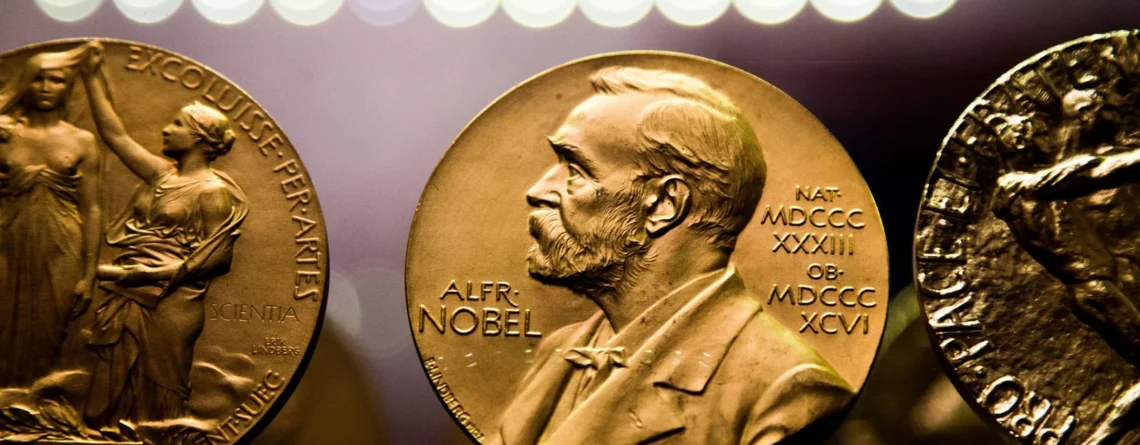
The community noticed. So, apparently, did the Nobel Committee.
This is the tension at the heart of deep tech. A researcher who makes a commercially significant discovery faces two paths that do not run in parallel. One leads to publication, recognition, and a contribution to the shared body of knowledge. The other leads to patents, exclusivity, and the possibility of building a company. Both paths are legitimate. They are also, in practice, difficult to walk at the same time.
The race that produced the dilemma
To see why the 1987 episode mattered, it helps to start a year earlier, in a laboratory in Zurich.
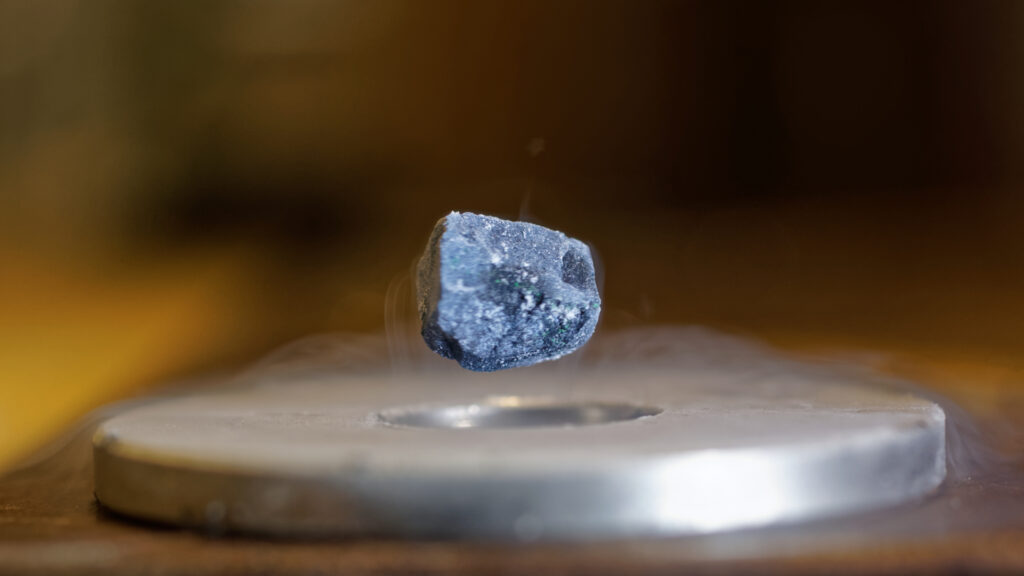
Superconductivity is the phenomenon by which certain materials, when cooled below a critical temperature, conduct electricity with zero resistance and expel magnetic fields from their interior. It is one of the most striking effects in condensed matter physics, and one of the most useful. The problem, historically, has been that the critical temperature for known superconductors sat extremely close to absolute zero, which made the effect a laboratory curiosity rather than a practical technology. Cooling things to within a few degrees of absolute zero requires liquid helium, which is expensive, finite, and logistically demanding.
In early 1986, two researchers at IBM Zurich, Georg Bednorz and Karl Alex Müller, reported superconductivity in a ceramic compound of lanthanum, barium, copper, and oxygen at around 35 K. The temperature was still far below anything that could be called warm, but it was higher than any superconductor previously observed, and the material itself was unusual. Ceramics were not supposed to superconduct at all. The result suggested that the textbook understanding of where superconductivity could appear was incomplete, and that higher temperatures might be reachable in materials no one had thought to test.
The reaction in the physics community was, after an initial lag, extraordinary. The Bednorz-Müller paper received no citations for the rest of 1986, then accumulated more than a thousand in 1987 alone. Laboratories across the United States, Japan, China, and Europe began synthesising variations of the original compound, swapping elements, adjusting ratios, and racing to find the next breakthrough. The pace was unusual even by the standards of competitive science. Results were being shared at conferences before they had been written up. Rumours travelled faster than papers.
The race reached its decisive moment in late January 1987, when Paul Chu at the University of Houston and Maw-Kuen Wu at the University of Alabama in Huntsville, working in collaboration, found a yttrium-barium-copper-oxide compound that superconducted at 93 K. The number mattered because of a single threshold. Liquid nitrogen, which boils at 77 K, is far cheaper than liquid helium and is available from any industrial gas supplier. A superconductor that worked above 77 K was, for the first time, a candidate for real-world deployment. Power transmission, medical imaging, magnetic levitation, and quantum computing hardware all became plausible applications rather than speculative ones.
Chu and Wu understood what they had. They also understood that publishing the exact composition would allow every well-equipped laboratory in the world to replicate the material within days. So they did what any team in their position might be tempted to do. They moved to protect the discovery before disclosing it.
The weeks before publication
The exact sequence of events between the discovery on January 29 and the submission of the manuscript to Physical Review Letters on February 5 has been recounted many times, by many participants, with details that do not always agree. What is clear is that the group operated, during those weeks, in a posture of unusual secrecy.
Internal lab records from the period used the symbol “Yb” in place of “Y” in some compositional notation, a precaution that would protect against the wrong piece of paper reaching the wrong reader. Discussions about the material were guarded. The manuscript itself, when submitted, contained the correct composition, but the surrounding behaviour reflected an awareness that the discovery was not only a scientific result but also a commercial asset. A patent disclosure had been prepared in early January, before the most significant experiments had even been performed.
Whether the precautions taken during those weeks were proportionate, excessive, or simply prudent depends on the standpoint. From a technology transfer perspective, the reasoning is coherent. The investment required to translate a laboratory result into an industrial product is substantial, and that investment is not made by anyone who cannot protect it. From a scientific perspective, the reasoning sits uneasily with the norms of the field. Reproducibility is not a procedural courtesy. It is the mechanism by which a claim becomes a fact. A result that cannot be independently verified during the window in which verification matters is, for practical purposes, a weaker result.
Later that year, the Nobel Prize in Physics was awarded to Bednorz and Müller for their discovery of superconductivity in ceramic materials. The citation referred specifically to the 1986 result, the lower-temperature compound that had started the race. Chu, Wu, and the YBCO group were not included, despite having produced what was, by any practical measure, the more consequential material.
The Nobel Committee does not publish its reasoning for exclusions, and it would be an overreach to claim the omission was a direct response to the secrecy in handling of the YBCO discovery. The citation can be read as a straightforward recognition of priority: Bednorz and Müller opened the field, and the prize honoured that.
But the community read the absence as something more, and that reading has persisted. It is now part of the standard account of what happened in 1987, told as a story about what scientific recognition rewards and what it does not.
Why the dilemma will not go away
A reasonable question to ask, four decades later, is whether the YBCO situation was a one-off, a product of particular personalities and a particular moment. The answer is that it was not. The conflict between scientific disclosure and commercial protection is not driven by individual choices. It is driven by three asymmetries that are properties of the systems involved, and those asymmetries have intensified rather than weakened.
The first is that disclosure is irreversible while protection is not. A result, once published, cannot be unpublished. A patent, by contrast, can be filed at any point before disclosure and, in most jurisdictions, at no point after. This single fact reshapes the incentives of anyone with a commercially relevant discovery. There is no penalty for delaying publication to file a patent, except the cost of being scooped. There is an absolute penalty for publishing first, which is the permanent forfeiture of patent rights in most of the world. The asymmetry favours delay, by construction.
The second asymmetry is temporal. Peer review at a major journal typically takes several months from submission to publication. A competitive funding round in deep tech, by contrast, closes in weeks. A startup that needs to demonstrate defensible intellectual property to its investors cannot wait for a journal to clear its result. The patent timeline, which can be initiated immediately and which establishes priority on the day of filing, dominates the publication timeline whenever both are being pursued. The clocks were already mismatched in 1987. The acceleration of venture funding has made the mismatch much worse.
The third asymmetry is that the same person can be both a researcher and a founder, and the two roles have different success conditions. An academic researcher is evaluated on publications, citations, and priority of discovery. A founder is evaluated on the defensibility of the company’s technical position, which often depends on what is not disclosed. When these roles coexist in a single person or a single laboratory, the optimal behaviour depends on which role is dominant at the moment of decision.
The contemporary version
The 1987 episode involved one discovery, one journal, and a handful of laboratories. The contemporary version of the problem is more diffuse and harder to manage.
Deep tech now spans a wider range of fields than it did then. Quantum computing, post-quantum cryptography, advanced materials, gene editing, and machine learning all share the property that the distance between a fundamental scientific result and a fundable company can be measured in months rather than decades. In some cases, the same individuals occupy both roles. A graduate student publishes a result, a venture firm reads the paper, and within a year the student is a founder with a Series A. The boundary between academic disclosure and commercial protection runs through single careers.
The commercial stakes are also harder to assess in advance. A new molecule may become a billion-dollar drug or may fail in clinical trials. A new cryptographic protocol may become a foundational primitive or may be broken within six months. A new quantum algorithm may unlock a class of problems or may turn out to depend on assumptions that real hardware cannot satisfy. The decision to publish or to patent must often be made before the answer is known. Researchers are being asked to make option-pricing decisions with incomplete information, on timelines that do not permit patient analysis.
Several intermediate strategies have emerged. Some firms publish performance benchmarks without disclosing implementation details. Some publish theoretical frameworks while keeping the engineering work as trade secrets. Some collaborate with academic partners under arrangements that allow publication of results that have already been protected. These approaches reduce the conflict but do not resolve it. The community can verify what is published but cannot independently evaluate what is withheld, which limits the scientific weight of the disclosed portion. The firm protects its position but does so by accepting a permanently reduced contribution to the public record.
The alternative, full and immediate disclosure, preserves the scientific norms but exposes the discovery to replication before any commercial structure can be built around it. In fields where the engineering moat is narrow and the algorithmic or chemical insight is the primary asset, full disclosure can erase commercial value within months. The choice is real, and it does not have a neutral default.
A dilemma without a resolution
The system the scientific community continues to assume, in which disclosure is the default and protection is the exception, was built for a research environment that no longer exists in much of deep tech. The system the commercial world assumes, in which protection is the default and disclosure follows only when it is strategically useful, was built for industries where the underlying knowledge was developed internally rather than imported from public research. Neither system was designed for the situation in which most cutting-edge research now happens, and neither accommodates the other gracefully.
The question raised in late January 1987, whether to publish for recognition or to withhold for advantage, has not been resolved in the four decades since. It has only spread. It now appears in more fields, involves more actors, and operates on shorter timelines. Every researcher working on a commercially relevant problem encounters some version of it, often more than once.
There may be no clean resolution available. The institutions involved have different objectives, different timescales, and different definitions of success. They coexist in the same ecosystem because they have to, not because they fit. The most that can be said is that the dilemma is structural, that it predates the current generation of deep tech companies, and that anyone working at the intersection of fundamental research and commercial application will, at some point, have to choose how they navigate it.

We Factored the Number 49337 on a Quantum Computer
Explaining why this is a clickbait reveals important features of the current status of quantum computers and the quest for breaking encryption.Factoring numbers is not just a mathematical curiosity. It is the backbone of much of the encryption that shields...
By
How to Build, Measure & Control a Superconducting Qubit
Quantum sensing has shown promising results in GPS-free navigation
By

Quantum Might Be The Solution to GPS Denial
Quantum sensing has shown promising results in GPS-free navigation
By

Quantum Computing and Environmental Sustainability
Quantum computing may look energy-hungry, yet its speed, chemistry breakthroughs, and reversible logic hint at a future of truly sustainable computing.
By

Qubits technologies
The competing technologies in the run for a Fault-Tolerant Quantum Computer
By

Microsoft Unveils Majorana 1: The First Quantum Processor with Topological Qubits
Discover Majorana 1, Microsoft's first quantum processor based on topological qubits. A breakthrough in quantum computing with the potential to solve large-scale industrial problems sooner than expected.
By